How to Choose Dental Floss: Materials, PFAS, and What Matters Most
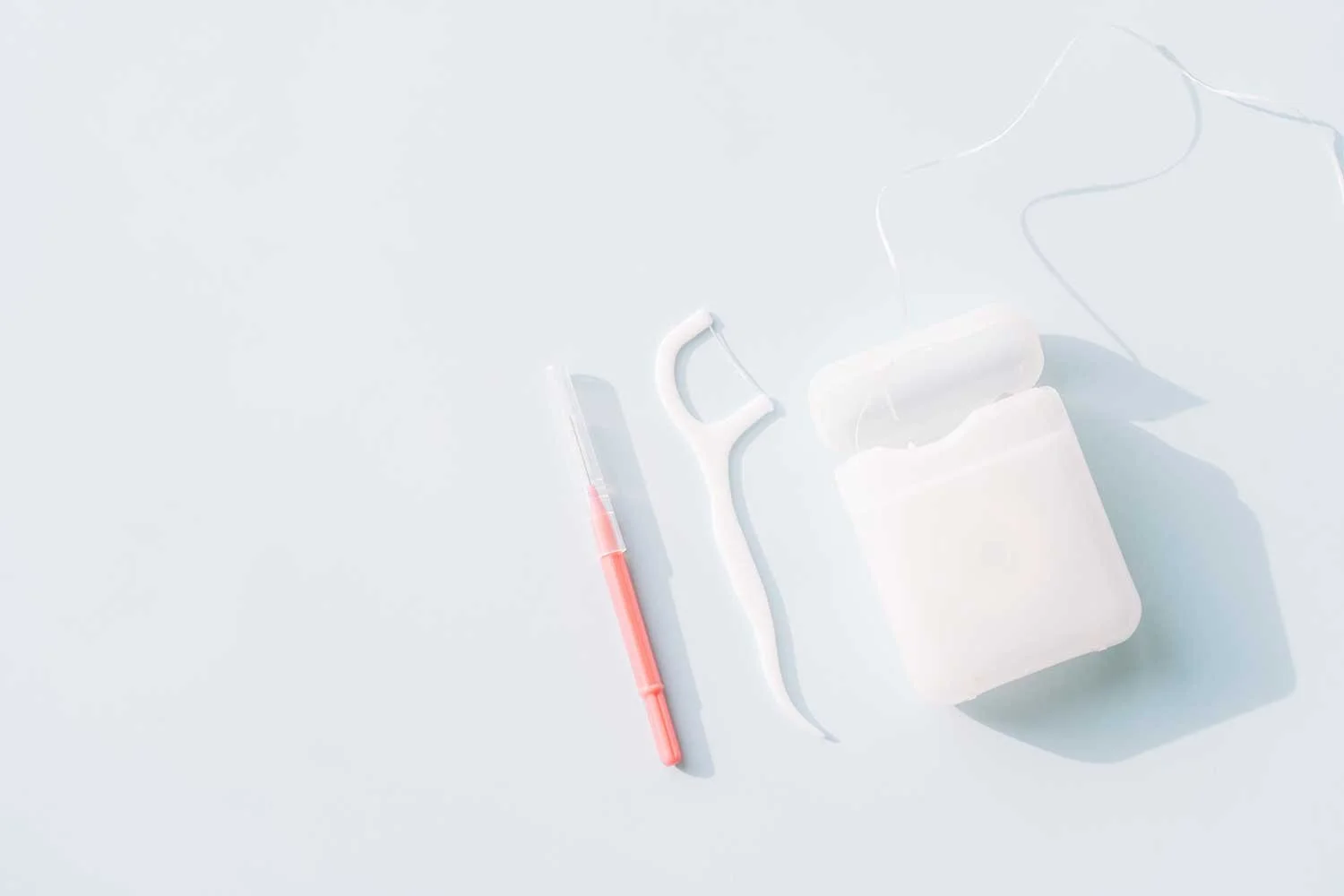
The best dental floss is one that cleans effectively between your teeth, feels comfortable enough to use consistently, and aligns with your material preferences. If you want to limit exposure to PFAS, look for a product whose manufacturer explicitly states that it is made without PTFE and intentionally added PFAS. Because formulations can change, current manufacturer information is more reliable than an older online product list.
Why clean between your teeth?
A toothbrush cannot fully clean the tight spaces between teeth. Floss or another interdental cleaner helps disrupt plaque in those areas before it hardens into calculus. Daily interdental cleaning can support gum health and may reduce plaque or gingivitis when added to toothbrushing, although the certainty and size of benefit vary across studies.
That is a meaningful oral-health benefit. It is not evidence that flossing adds a specific number of years to your life, prevents heart disease, or treats a systemic condition. Oral and overall health are connected in important ways, but those broader claims should not be reduced to a life-expectancy promise.
What does PFAS have to do with dental floss?
PFAS are a large family of manufactured fluorinated chemicals valued for properties such as resistance to heat, water, oil, and friction. Some PFAS persist for a long time in the environment and in the body, and certain well-studied PFAS have been associated with adverse health effects at sufficient exposure levels.
Some smooth, shred-resistant flosses have been made with polytetrafluoroethylene, or PTFE. Under broad contemporary definitions, PTFE is included within the PFAS family. However, the term PFAS covers thousands of substances with different properties; the presence of a fluoropolymer does not by itself establish the amount transferred during flossing or the health risk from using a particular product.
What the dental-floss research found - and did not find
A 2019 study of 178 midlife women measured several PFAS in blood and asked about potential exposure behaviors. Women who reported using Oral-B Glide floss had higher levels of one PFAS, PFHxS, than women who did not report using it. The researchers also detected fluorine in three Glide samples and three other floss products, a finding consistent with fluorinated material.
The study raised a reasonable question, but it had important limits: it was observational, relied partly on self-reported behavior, involved a relatively small group, and could not prove that floss caused the blood levels. It also did not test every product sold under a brand name. A 2025 cross-sectional analysis likewise reported differing associations between floss habits and individual serum PFAS concentrations, but it could not establish cause and effect.
The practical conclusion is not to stop cleaning between your teeth. Patients who prefer to avoid fluorinated floss can choose another material and confirm current product information with the manufacturer.
How to choose a floss that fits your priorities
What to check: Core material
Why it matters: Floss may be made from nylon, polyester, silk, expanded PTFE, or other fibers.
Practical approach: To limit PFAS by preference, look for explicit 'no PTFE' and 'no intentionally added PFAS' statements.
What to check: Coating
Why it matters: Wax or textured coatings can affect glide, grip, and comfort.
Practical approach: Choose the least complicated coating that still lets you clean without shredding or snapping.
What to check: Flavor and fragrance
Why it matters: Essential oils, flavorings, and fragrances may bother sensitive mouths or patients with strong preferences.
Practical approach: Select an unflavored option if irritation, taste, or scent is a concern.
What to check: Fit and technique
Why it matters: Very tight contacts, wide spaces, braces, bridges, implants, and dexterity limitations need different tools.
Practical approach: Ask your dental team to demonstrate floss, tape, threaders, interdental brushes, or a water flosser.
What to check: Current disclosure
Why it matters: Packaging and formulas can change after an article is published.
Practical approach: Check the current label and manufacturer's website; contact the company when wording is unclear.
Waxed versus unwaxed floss
Waxed and unwaxed floss can both remove plaque when used correctly. Unwaxed floss is not automatically more effective, and wax is not automatically undesirable. Waxed floss may slide more easily through tight contacts; textured or expanding floss may feel easier to control in larger spaces. Comfort and correct technique matter more than treating one category as universally best.
Floss is not the only option
The right interdental tool depends on your anatomy and dexterity. A small interdental brush may be especially useful around larger spaces, periodontal areas, bridges, or orthodontic appliances. A water flosser can be helpful for people who find string floss difficult to manage. Floss picks may improve consistency, although they can make it harder to wrap the strand around each tooth. Your hygienist can help size and demonstrate the tool that fits your mouth.
A simple patient checklist
Choose a format you can use gently and consistently.
If PFAS avoidance is important to you, verify both PTFE-free and no intentionally added PFAS wording.
Avoid assuming that 'natural,' 'clean,' 'vegan,' or 'biodegradable' proves a product is PFAS-free or appropriate for you.
Stop and ask for guidance if floss repeatedly catches, shreds, causes pain, or reveals persistent bleeding.
Bring the package or ingredient information to your appointment if you want help reviewing a specific product.
The bottom line
You do not need to abandon interdental cleaning because of concern about one material. Choose a floss or interdental cleaner that suits your mouth and values, verify current disclosures when PFAS avoidance matters to you, and focus on gentle technique you can maintain. At Atlanta Dental Wellness, we welcome questions about oral-care materials and can help you choose an option based on your teeth, gums, restorations, sensitivities, and preferences.
Call (404) 233-1102 or schedule an appointment to discuss a personalized home-care routine.
Frequently Asked Questions
Does all dental floss contain PFAS?
No. Dental floss can be made from several materials, and not every floss is PTFE-based or made with intentionally added PFAS. Product composition changes, so check the current label and manufacturer disclosure rather than relying on an older brand list.
Is PTFE the same thing as PFAS?
PTFE is a fluoropolymer included within broad definitions of the PFAS family. PFAS is a much larger category, and individual substances differ in mobility, persistence, exposure pathways, and available health evidence.
Should I stop flossing if I am concerned about PFAS?
No. Continue cleaning between your teeth with a product or device that fits your preferences. If you want to avoid fluorinated floss, choose one explicitly described as PTFE-free and made without intentionally added PFAS, or ask your dental team about another interdental cleaner.
Are water flossers or interdental brushes as good as string floss?
They can be appropriate and effective alternatives, depending on the spaces between your teeth, restorations, gum condition, dexterity, and technique. A dental professional can help you select and correctly size the best option for your mouth.