The Tooth-Organ Meridian Chart: What It Is and What It Isn't

A Map Worth Understanding
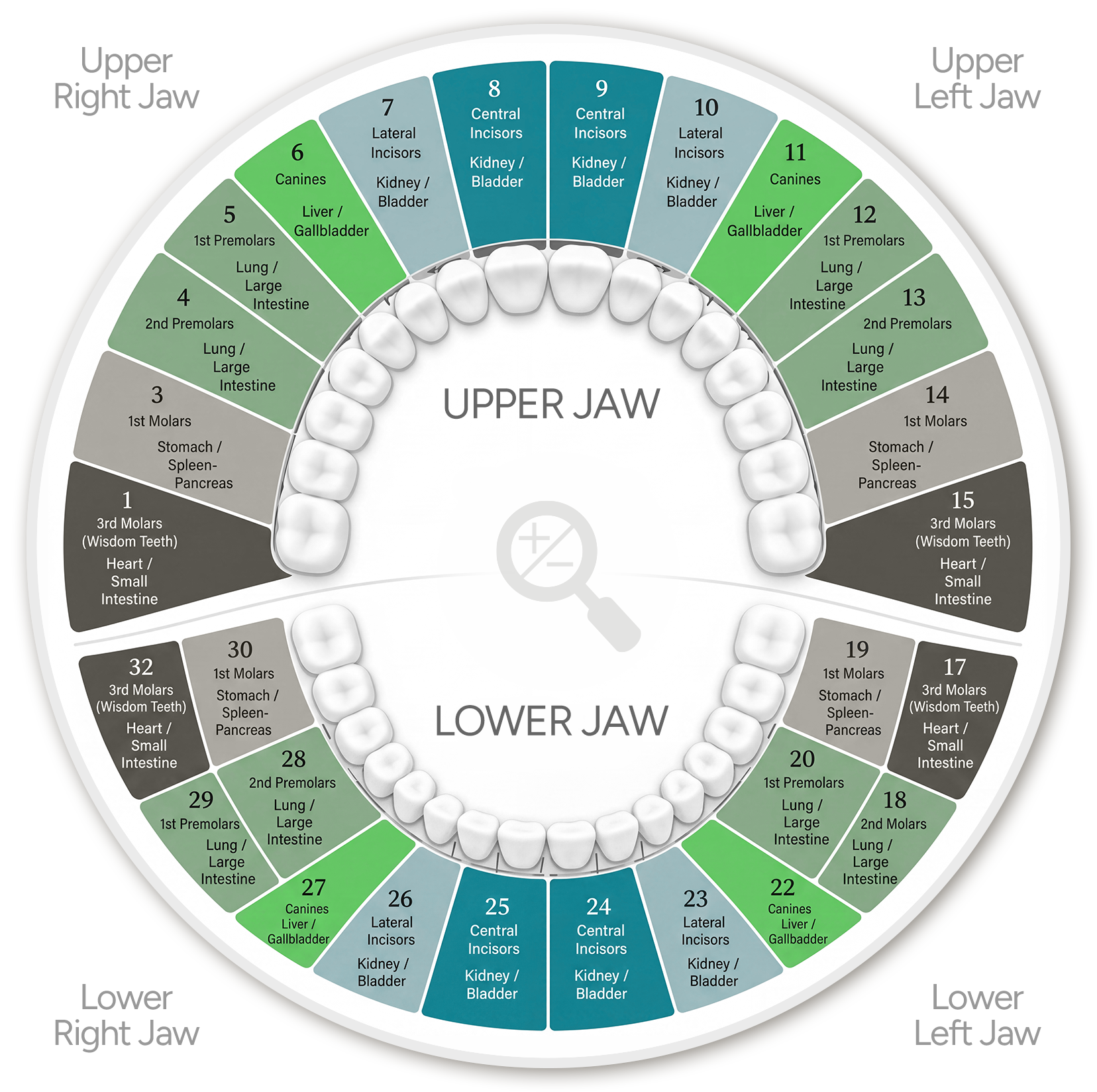
The tooth-organ meridian chart links each tooth to organs and body systems based on traditional energy-meridian models, not on anatomy. Research has not shown that it can diagnose health problems. At Atlanta Dental Wellness, we use it as a conversation starter about how your mouth and body relate, never as a diagnosis.
Where the Chart Comes From
The chart draws on traditional Chinese medicine meridian concepts and a mid-20th-century European model called electroacupuncture according to Voll (EAV). These traditions describe energy pathways that connect parts of the body. Each tooth is assigned to one or more pathways, such as linking certain molars with the digestive system.
What Research Shows
No nerve or blood vessel runs from an individual tooth to a specific organ in the way the chart suggests. Studies have not shown that the chart can reliably predict or diagnose disease. This is why we do not use it to recommend treatment.
At the same time, the chart points to something that is well documented: oral health and whole-body health are connected through blood supply, immune responses, and inflammation. That real connection is why we take your overall health seriously.
Chart Claims and Evidence at a Glance
| Idea | Traditional view | Current evidence |
|---|---|---|
| Each tooth links to a specific organ | Yes, through energy meridians | Not supported by anatomy or research |
| A problem tooth can signal organ trouble | Yes | Not shown to be diagnostic |
| Oral inflammation can affect the body | Yes | Supported, especially gum disease and diabetes |
| Treating a tooth will heal an organ | Sometimes implied | Not supported |
How We Use It at Atlanta Dental Wellness
We share the chart because many patients ask about it and want to understand it.
We use it to open a conversation about your health history and concerns.
We base diagnoses and recommendations on examination, imaging, and clinical findings.
We will never recommend removing a tooth or filling based on the chart alone.
Both of our dentists, Dr. Cale Jackson and Dr. Matthew Giordano, are SMART-certified and accredited by the International Academy of Oral Medicine and Toxicology (IAOMT).
Frequently Asked Questions
These answers address common questions patients ask about the tooth-organ meridian chart. Your examination and health history may lead to different advice for you.
-
It is a chart that links each tooth to organs and body systems based on traditional energy-meridian models.
It comes from traditional Chinese medicine and electroacupuncture according to Voll. It is not based on anatomy.
-
Not in the direct way the chart suggests. No nerve or vessel runs from an individual tooth to a specific organ.
Oral health does affect the body through blood flow, immune responses, and inflammation, which is well documented.
-
In the traditional chart, front teeth are often linked with the kidneys and bladder, and molars with the digestive system, among other pairings.
These links are traditional associations, not medical findings, and they should not be used to diagnose disease.
-
An untreated dental infection can spread and cause serious illness, and chronic gum inflammation is linked with conditions such as diabetes.
That is different from the chart's idea that each tooth is tied to a specific organ.
-
No. Research has not shown that the chart can reliably diagnose or predict health problems.
We share it as a conversation starter and base all recommendations on clinical findings.
-
Many patients ask about it, and we believe you deserve an honest explanation rather than silence.
It helps start a conversation about how your oral health and overall health relate, which is a real and important connection.
Your Mouth Doesn't Exist Separately From the Rest of Your Body
If you have questions about the chart or how your oral health relates to your overall health, schedule a conversation with Atlanta Dental Wellness in Atlanta.